


Source: http://news.feedzilla.com/en_us/stories/politics/top-stories/314467539?client_source=feed&format=rss
mariana trench transcendental meditation trayvon martin obama care miss universe canada don draper gallagher

The annual ?Pink Out the Park? event at Comerica Park raises awareness of breast cancer and helps raise funds for breast cancer research at the Karmanos Cancer Institute. (Photo credit Ron Wade/Karmanos Cancer Institute)
DETROIT (WWJ) -?The Detroit Tigers and the Barbara Ann Karmanos Cancer Institute are teaming up for the second annual Pink Out the Park at the Detroit Tigers vs. Kansas City Royals game Friday, Sept. 13, at 7:08 p.m., at Comerica Park.
The event raises awareness of breast cancer, as well as helps raise funds for breast cancer research at the Karmanos Cancer Institute.
Detroit Tigers fans will have two ticket package opportunities and each ticket purchase will include a Pink Out the Park t-shirt?? which will be the only way to get this limited edition t-shirt.? Visit www.tigers.com/pinkout for ticket purchase information.
Plus, the first 10,000 fans through the gates will receive a pink bag giveaway.
There will also be kiosks throughout Comerica Park with breast health education materials for fans to take home. Proceeds from two 50/50 raffles at Comerica Park, one to be held Sept. 13 and the other Sept. 14, will also benefit Karmanos? breast cancer research.
?Everyone knows someone touched by breast cancer,? Tom Brookens, Detroit Tigers third base coach, said in a statement. ?Raising awareness of breast cancer to help prevent it, detect it early and develop new treatments has parallels to a winning baseball team: it takes hard work, persistence and teamwork.?
?The Detroit Tigers are proud to team up with the Karmanos?Cancer Institute for the second annual Pink Out the Park. Together, with our fans, we will raise awareness and encourage funding for breast cancer research right here at home at the Karmanos Cancer Institute.?
The Barbara Ann Karmanos Cancer Institute is one of only 41 National Cancer Institute-designated comprehensive cancer centers in the country and the only hospital in Michigan solely focused on treating cancer.
chipper jones chipper jones mickael pietrus heart transplant the international preppers geraldo
 We've just made our way out of Facebook's Headquarters in Menlo Park, where Instagram CEO Kevin Systrom took the stage to debut the app's new (and not un-Vinelike) video functionality.
Source: http://feedproxy.google.com/~r/Techcrunch/~3/sKSJJnmWw0c/
the hobbit mick jagger Newton Shooting Newtown Shooting Gangnam Style Ryan Lanza Sandy Hook
June 20, 2013 ? Neuroscientists at The Scripps Research Institute (TSRI) have filled in a significant gap in the scientific understanding of how neurons mature, pointing to a better understanding of some developmental brain disorders.
In the new study, the researchers identified a molecular program that controls an essential step in the fast-growing brains of young mammals. The researchers found that this signaling pathway spurs the growth of neuronal output connections by a mechanism called "mitochondrial capture," which has never been described before.
"Mutations that may affect this signaling pathway already have been found in some autism cases," said TSRI Professor Franck Polleux, who led the research, published June 20, 2013 in the journal Cell.
Branching Out
Polleux's laboratory is focused on identifying the signaling pathways that drive neural development, with special attention to the neocortex -- a recently evolved structure that handles the "higher" cognitive functions in the mammalian brain and is highly developed in humans.
In a widely cited study published in 2007, Polleux's team identified a trigger of an early step in the development of the most important class of neocortical neurons. As these neurons develop following asymmetric division of neural stem cells, they migrate to their proper place in the developing brain. Meanwhile they start to sprout a root-like mesh of input branches called dendrites from one end, and, from the other end, a long output stalk called an axon. Polleux and his colleagues found that the kinase LKB1 provides a key signal for the initiation of axon growth in these immature cortical neurons.
In the new study, Polleux's team followed up this discovery and found that LKB1 also is crucially important for a later stage of these neurons' development: the branching of the end of the axon onto the dendrites of other neurons.
"In experiments with mice, we knocked the LKB1 gene out of immature cortical neurons that had already begun growing an axon, and the most striking effect was a drastic reduction in terminal branching," said Julien Courchet, a research associate in the Polleux laboratory who was a lead co-author of the study. "We saw this also in lab dish experiments, and when we overexpressed the LKB1 gene, the result was a dramatic increase in axon branching."
Further experiments by Courchet showed that LKB1 drives axonal branching by activating another kinase, NUAK1. The next step was to try to understand how this newly identified LKB1-NUAK1 signaling pathway induced the growth of new axon branches.
Stopping the Train in Its Tracks
Following a thin trail of clues, the researchers decided to look at the dynamics of microtubules. These tiny railway-like tracks are laid down within axons for the efficient transport of molecular cargoes and are altered and extended during axonal branching. Although they could find no major change in microtubule dynamics within immature axons lacking LKB1 or NUAK1, the team did discover one striking abnormality in the transport of cargoes along these microtubules. Tiny oxygen-reactors called mitochondria, which are the principal sources of chemical energy in cells, were transported along axons much more actively -- and by contrast, became almost immobile when LKB1 and NUAK1 were overexpressed.
But the LKB1-NUAK1 signals weren't just immobilizing mitochondria randomly. They were effectively inducing their capture at points on the axons where axons form synaptic connections with other neurons. "When we removed LKB1 or NUAK1 in cortical neurons, the mitochondria were no longer captured at these points," said Tommy Lewis, Jr., a research associate in the Polleux Laboratory who was co-lead author of the study.
"We argue that there must be an active 'homing factor' that specifies where these mitochondria stop moving," said Polleux. "And we think that this is essentially what the LKB1-NAUK1 signaling pathway does here."
Looking Ahead
Precisely how the capture of mitochondria at nascent synapses promotes axonal branching is the object of a further line of investigation in the Polleux laboratory. "We think that we have uncovered something very interesting about mitochondrial function at synapses," Polleux said.
In addition to its basic scientific importance, the work is likely to be highly relevant medically. Developmentally related brain disorders such as epilepsy, autism and schizophrenia typically involve abnormalities in neuronal connectivity. Recent genetic surveys have found NUAK1-related gene mutations in some children with autism, for example. "Our study is the first one to identify that NUAK1 plays a crucial role during the establishment of cortical connectivity and therefore suggests why this gene might play a role in autistic disorder," Polleux says.
He notes, too, that declines in normal mitochondrial transport within axons have been observed in neurodegenerative disorders such as Alzheimer's and Parkinson's diseases. "In the light of our findings, we wonder if the decreased mitochondrial mobility observed in these cases might be due not to a transport defect, but instead to a defect in mitochondrial capture in aging neurons," he said. "We're eager to start doing experiments to test such possibilities."
The study was funded in part by the National Institutes of Health (grants R01AG031524 and 5F32NS080464), ADI-Novartis, Fondation pour la Recherche Medicale, and the Philippe Foundation.
Source: http://feeds.sciencedaily.com/~r/sciencedaily/most_popular/~3/c9O4LePge8o/130620132108.htm
awakenings phantom of the opera agoraphobia andrew lloyd webber obscura grok cirque du freak
Hundreds of existing coal-burning plants could be shut down under expected EPA rules aimed at curbing climate change. But such action must be accompanied by Obama appealing directly to people in coal-dependent states who would be making the big sacrifices.
Southern Company's Plant Bowen in Cartersville, Georgia is seen in this 2007 aerial photograph.
Reuters
EnlargeAs president, Barack Obama has never visited North Dakota. Does that matter? Yes, if he now acts to effectively shut down hundreds of coal-burning power plants, a regulatory move that officials say is only days away.
Skip to next paragraph' +
google_ads[0].line2 + '
' +
google_ads[0].line3 + '
Subscribe Today to the Monitor
In 2010, North Dakota generated 82 percent of its electricity from coal. Many other states, from Wyoming to Kentucky, rely heavily on coal for either energy or jobs. In 15 states, at least half of the power comes from coal. To be sure, they are among the worst contributors to global warming.
Yet people in these states would be forced to make the largest personal sacrifice in Mr. Obama?s plan to dethrone ?king coal? and help the United States be a leader in curbing climate change.
The president should now visit those places heavily dependent on coal and try better persuasion. This would be smart politics to avoid the blocking tactics of both Democratic and Republican leaders from those states. But it would also address on a personal level the fact that Americans in general remain resistant to the sacrifices needed for drastic reductions in greenhouse-gas emissions.
Five years ago, for example, 48 percent of Americans said their personal actions on energy use would significantly reduce their contribution to global warming; that figure has since dropped to 31 percent, according to the latest survey by Yale and George Mason universities.
Such trends show Obama has work to do. And those states most dependent on fossil fuels are most in need of being convinced of their common bond to the rest of humanity and to future generations. Environmental action relies more on individuals than government to see themselves in a wider, even global community and accept the discipline and sacrifice needed to protect the planet.
That may sound a bit corny, but the main tactic of climate-change activists ? stoking fear ? hasn?t worked very well over the past quarter century. And appeals that rely on scientific predictions of temperature increases and to economic self-interest have also shown their limits.
Obama blames Congress for not requiring the existing coal plants to end carbon emissions into the atmosphere ? a requirement that is unfeasible with current commercial technology. He has long threatened to take executive action. Indeed White House officials said this week the Environmental Protection Agency (EPA) will soon issue regulations on existing plants.
Such tough emission rules will probably face a long battle in the courts with suits filed by coal-dependent states ? whether their governors are Democratic or Republican. Kansas, Montana, and West Virginia have already advised the Supreme Court that the EPA is abusing its authority under the Clean Air Act.
Heather Zichal, the White House coordinator for energy and climate change, says Obama has made action on climate change a ?legacy issue? for his second term. If so, he needs to do more than give speeches on global warming in Washington or, as he did this week, in Berlin.
?Peace with justice means refusing to condemn our children to a harsher, less hospitable planet,? he told the Germans. Now he needs to look North Dakotans in the eye and convince them of the need for heart-felt responsibility ? and sacrifice ? for the rest of the world.
Source: http://rss.csmonitor.com/~r/feeds/csm/~3/4EdeeUjuWOA/Obama-s-cold-calculation-on-global-warming
Pat Summerall Martin Richard friends awkward awkward Girls Love Beyonce gun control
Sorry, Readability was unable to parse this page for content.
delonte west vanessa williams nicklas backstrom discovery shuttle allure jane goodall saturday night fever

40 minutes ago
Tony and Carmela Soprano were never going to be Mike and Carol Brady, and that was just fine with fans of "The Sopranos." But Edie Falco's Carmela was an indispensable asset in shaping who Tony was, and wanted to become -- and in the process helped Gandolfini humanize his mobster boss. They fought plenty, but underneath it all they loved each other, and never split up.

HBO via AP
Edie Falco portrays Carmela Soprano and James Gandolfini is Tony Soprano in a scene from one of the last episodes of the hit HBO dramatic series "The Sopranos."
Falco, who now stars on Showtime's "Nurse Jackie," released a statement Thursday morning on Gandolfini's untimely passing, saying: "I am shocked and devastated by Jim's passing. He was a man of tremendous depth and sensitivity, with a kindness and generosity beyond words. I consider myself very lucky to have spent 10 years as his close colleague.
"My heart goes out to his family," she added. "As those of us in his pretend one hold on to the memories of our intense and beautiful time together. The love between Tony and Carmela was one of the greatest I've ever known."
channing tatum Jennifer Aniston naomi watts Oscar Nominations 2013 Beasts of the Southern Wild 2013 Oscars academy awards
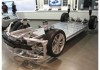 Tesla teased electric motorheads earlier this week by announcing an event that would show off its curious battery swapping system, and it wound up being even more impressive than most of us imagined. Long story short, Tesla can swap a Model S's battery in just 90 seconds (that's less time than it takes to fuel up a regular car), and you won't even have to get out of your seat to do it.
Source: http://feedproxy.google.com/~r/Techcrunch/~3/QC0ODVGCv5U/
ariel winter Paige Butcher David Petraeus Petraeus Mia Love wall street journal us map
OAKLAND TOWNSHIP, Mich. (AP) ? The excavation of a field in suburban Detroit has failed to turn up the remains of former Teamsters union leader Jimmy Hoffa, the FBI announced Wednesday, adding another unsuccessful chapter to a nearly 40-year-old mystery.
Authorities stopped the dig after just a few hours on the third day.
"We did not uncover any evidence relevant to the investigation on James Hoffa," said Robert Foley, head of the FBI in Detroit.
"I am very confident of our result here after two-days plus of diligent effort," he said. "As of this point, we'll be closing down the excavation operation."
Authorities have pursued multiple leads as to Hoffa's whereabouts since his disappearance in 1975. He was last seen outside an Oakland County restaurant where he was to meet with a New Jersey Teamsters boss and a Detroit Mafia captain.
The latest tip about Hoffa's remains came from reputed Mafia captain Tony Zerilli, who, through his lawyer, David Chasnick, said Hoffa was buried beneath a concrete slab in a barn in Oakland Township, north of Detroit.
The barn is gone, but FBI agents on Monday starting poring over the field where it used to stand.
"At the end of the day, everything Zerilli said is credible ? whether (Hoffa's remains are) still there and they missed it or not," Chasnick told The Associated Press Wednesday afternoon. "He knew about the barn. He knew about the cement.
Zerilli is "still is convinced it's there," Chasnick said. "I would have felt a lot better if they had done the whole area. What if they went five feet over one way? Ten feet the other way?"
On Tuesday, authorities used a backhoe to dig and move dirt around in the section of land. Authorities also called in forensic anthropologists from Michigan State University and cadaver dogs from the Michigan State Police.
"Certainly, we're disappointed" in the results, Foley told reporters Wednesday.
He said about 40 agents were involved in an operation that covered about an acre. The FBI has not put a cost on the search, but Foley said it's more important to solve a case.
"With any investigation we consider cost-benefits analysis," he said. "The FBI and its partners are no corporations. We do not have a profit margin as a bottom line."
Detroit FBI spokesman Simon Shaykhet said Wednesday that there was no connection between the dig for Hoffa's remains and an excavation on Tuesday at the house in New York once occupied by gangster James Burke. Burke, a Lucchese crime family associate known as "Jimmy the Gent," was the inspiration for Robert De Niro's character in the 1990 Martin Scorsese movie "Goodfellas."
Hoffa's rise in the Teamsters, his 1964 conviction for jury tampering and his presumed murder are Detroit's link to a time when organized crime, public corruption and mob hits held the nation's attention. Over the years, authorities have received various tips, leading the FBI to possible burial sites near and far.
In 2003, a backyard swimming pool was dug up 90 miles northwest of Detroit. Seven years ago, a tip from an ailing federal inmate led to a two-week search and excavation at a horse farm in the same region. Last year, soil samples were taken from under the concrete floor of a backyard shed north of the city. And detectives even pulled up floorboards at a Detroit house in 2004.
No evidence of Hoffa was found.
Other theories have suggested he was entombed in concrete at Giants Stadium in New Jersey, ground up and thrown in a Florida swamp or obliterated in a mob-owned fat-rendering plant.
Zerilli, now 85, was in prison for organized crime when Hoffa disappeared. But he told New York TV station WNBC in January that he was informed about Hoffa's whereabouts after his release. Chasnick has said Zerilli is "intimately involved" with people who know where the body is buried.
Details are in a manuscript Zerilli is selling online.
"He wants the story to come out," said Chasnick.
Source: http://news.yahoo.com/fbi-hunt-ex-teamster-boss-hoffas-remains-ends-145049888.html
Talk Like a Pirate Day raiders Demi Lovato iOS 6 Features big brother iOS 6 bank of america
